
SOUND AND VISION
How going on safari reboots your senses and then some...
At some point in the recent past, without anyone particularly noticing or consenting, the world became relentlessly, inescapably loud and bright. The noise simply never stops and while we don't notice it, it's there in the background, all the time, in the thrum of traffic and the movement of countless people going about their lives. And while the places we live are not permanently lit up like a football stadium on a Saturday night, there's the constant ambient glow of urban existence and the orange wash of streetlights that means most people alive on this planet have never once seen the Milky Way from their own doorstep. Thankfully a safari fixes all of this. Here's how...
Have you ever wondered why we've built ourselves environments of such comprehensive artificial stimulation that our senses have quietly, incrementally recalibrated around them, accepting the noise and the light that goes with them as the default condition of existence? It's as if we've forgotten entirely what the alternative feels like. Well, some of us have. Thank goodness we haven't because here in Africa there's enough space to escape "civilisation"!
What you hear...
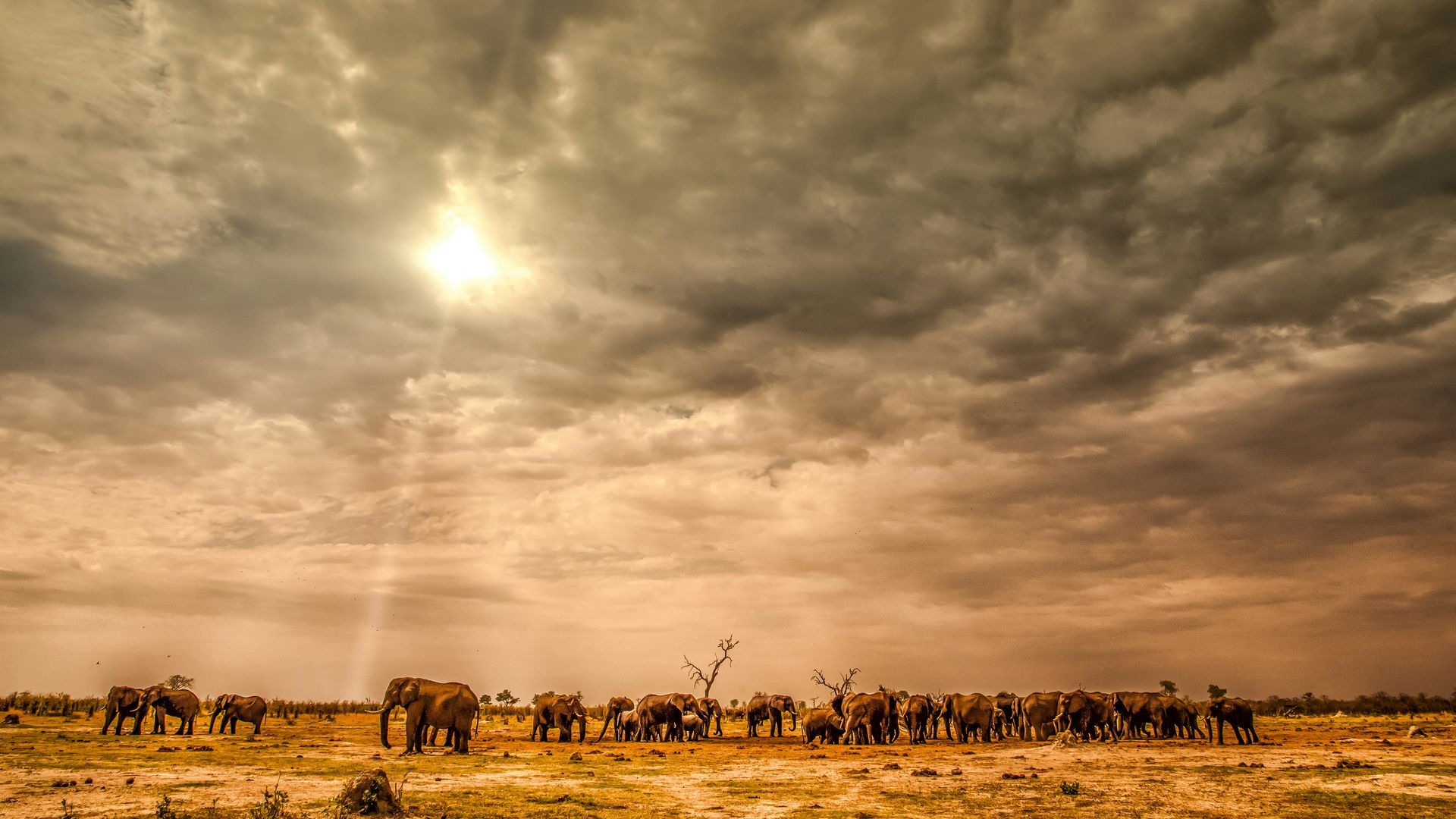
When you go out on safari into deepest, darkest Africa with us, the first thing that slaps you in the face is the quietness. It's not silence, but something more primal and intriguing that makes your ears recalibrate completely, becoming sharper and more attuned to everything around you. The African wilderness, especially at night, is extraordinarily, gloriously, almost aggressively full of sounds, none of which are familiar to you but all of which are mind-blowingly thrilling. Frogs that sound electronic; birds whose calls seem to come from the soundtrack of a cheap horror movie; the whooping call of a distant hyena that does something interesting to the hairs on the back of your neck even when you know, intellectually, that you're perfectly safe.
Then, if you're lucky and the conditions are right, the sound that stops everything: a lion calling in the darkness, a deep, resonant, chest-cavity rumble that carries for up to eight kilometres across the bush and makes every other sound temporarily irrelevant.
What's absent is what makes the difference. No engines. No notifications. No compression of a thousand overlapping artificial frequencies into the background radiation of urban life that you stopped hearing years ago precisely because it never stops.
The contrast, for a nervous system that has been absorbing that background noise without relief for years, is not just noticeable, it's physical. People describe it as a kind of unwinding, a gradual release of something they didn't know they were holding, a settling that happens somewhere behind the sternum and takes about 48 hours to complete. By their third night in the bush, most guests report sleeping better than they have in years, which is not a coincidence.
What you see...
The light pollution map of the modern world is one of the more quietly devastating documents in environmental literature. It shows the northern hemisphere largely washed out in a continuous orange glow, with genuine darkness restricted to the oceans, the high Arctic and a handful of wilderness areas remote enough to have escaped the reach of human illumination. Most people reading this blog have spent their entire lives in the orange zone, looking up at a sky that contains, on a good night, perhaps a few dozen visible stars and a Moon that seems brighter than it should because everything around it is bright too.
The night sky over the African bush is a different universe entirely and that is not a metaphor. It's a literal different experience of the actual universe, available to any human being who moves far enough from artificial light to see what has always been there. The darkness itself is the other revelation, though darkness is perhaps the wrong word for what the African bush at night actually delivers.
Away from artificial light, with nothing but wilderness in every direction, the sky becomes a light source in its own right, and a staggering one. The Milky Way, which most urban dwellers know only as a concept or a photograph, becomes a physical presence overhead, a dense river of light so detailed and so vast that first-time viewers tend to stop talking for a moment and simply look up with an expression that has nothing performative about it whatsoever.
There are so many stars visible in a truly dark-adapted sky over the African bush that the familiar constellations become temporarily harder to find, not because they've disappeared but because they're competing with several thousand other points of light that the light pollution of your city has been quietly suppressing for your entire life. The sky out here doesn't go dark, it goes extraordinary.
What it does to you...
The combination of natural sound and natural light does something to people that's consistently reported by safari guests and consistently difficult to articulate without sounding, as Sian would put it, slightly unhinged. A recalibration is the word most commonly attempted. A reset, restoration, reboot. Something that was running in the background of daily life at considerable cost and volume has been switched off, and in the quiet that follows, something older and more fundamental has switched back on.
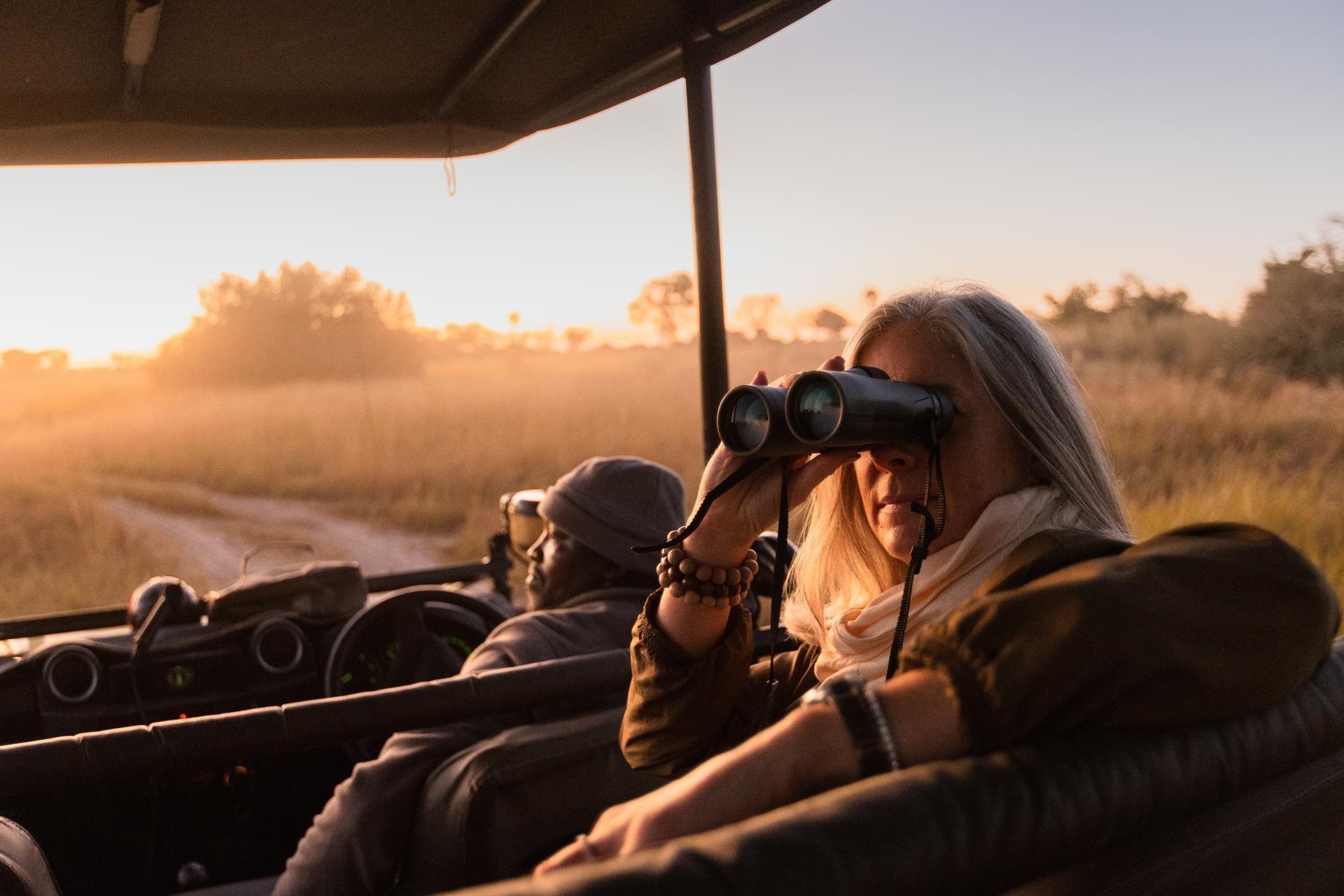
The dawn game drive is where this becomes most visceral. Out of the tent at 5am into air that is cold and clean and completely alive, with the sky doing that thing it does in Africa where the stars are still visible to the west while the east begins its slow negotiation with the light, and the bush is in full, unselfconscious, early morning voice around you.
The nightjars are finishing as the francolins are starting. Something is moving in the long grass to the left of the vehicle. The light comes up slowly and then what feels like all at once, and the landscape it reveals has the quality of something seen for the first time, even if you've been here before, even if you've done this a dozen times.
This is what Africa does to the senses when you give it the chance. It doesn't offer you silence or darkness as an absence of something. It offers you the original version of sound and light, the one that existed before the world decided to replace it with something noisier and brighter and considerably less interesting, and it turns out that the original version is the one your senses have been waiting for without knowing what they were waiting for.
The prescription nobody prescribed
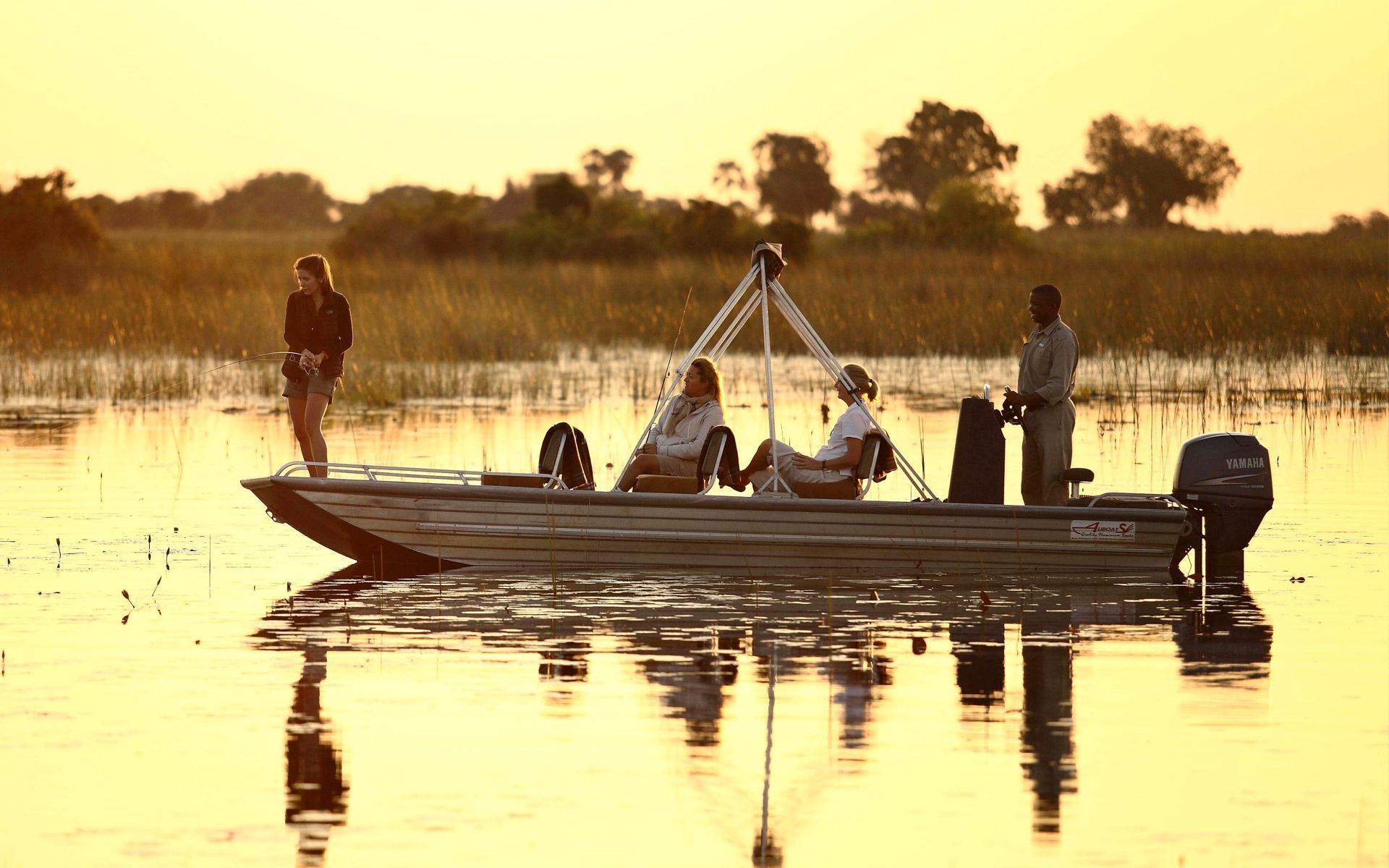
Nobody is suggesting you move to a tent in the Okavango permanently, tempting as that occasionally sounds. What Africa offers is not a permanent solution to the sensory overload of modern life but a reminder, delivered with characteristic African directness and total disregard for your existing assumptions, that the overload is not inevitable and the alternative is not deprivation but restoration.
Guests who come back from safari changed in ways they find difficult to explain are not being dramatic. They have experienced, perhaps for the first time as adults, what their senses are actually capable of when the artificial competition is removed. They have heard properly and seen properly and slept properly, and the contrast with ordinary life is sufficiently dramatic that ordinary life looks, for a while at least, rather different than it did before.
This is one of the things that brings people back to Africa, again and again, long after they've seen everything they came to see and ticked every wildlife box they arrived with. The senses remember what they experienced here and they want it back.
Ready to hear and see Africa properly? Get in touch with Sian and Cara at Zafaris and let's give your senses something genuinely worth experiencing.
Text: Sharon Gilbert-Rivett