
FEEDING FRENZY
How safari food got so good...
A couple of decades ago, food on safari was fuel, good, hearty, entirely functional fuel. There was a proper breakfast before the game drive, something substantial at lunch, a decent dinner around the boma fire, but everything was functional, filling and frill-less. The point of it was to keep you upright and enthusiastic for the next wildlife encounter, not to compete with it. Nobody came back from a safari in 1996 and led with the kudu carpaccio! Fast forward to now and things have changed. Like, seriously changed. Here's how...
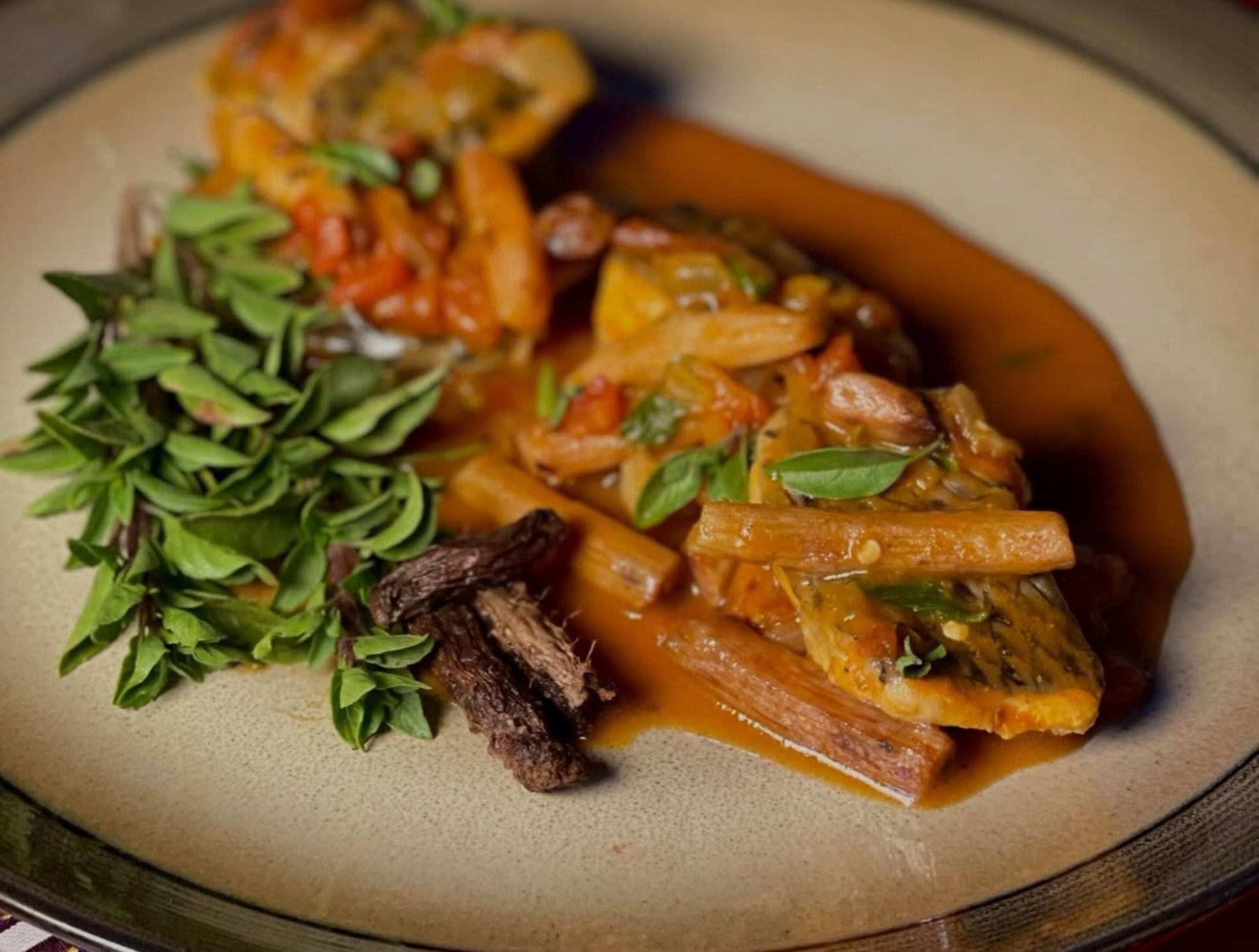
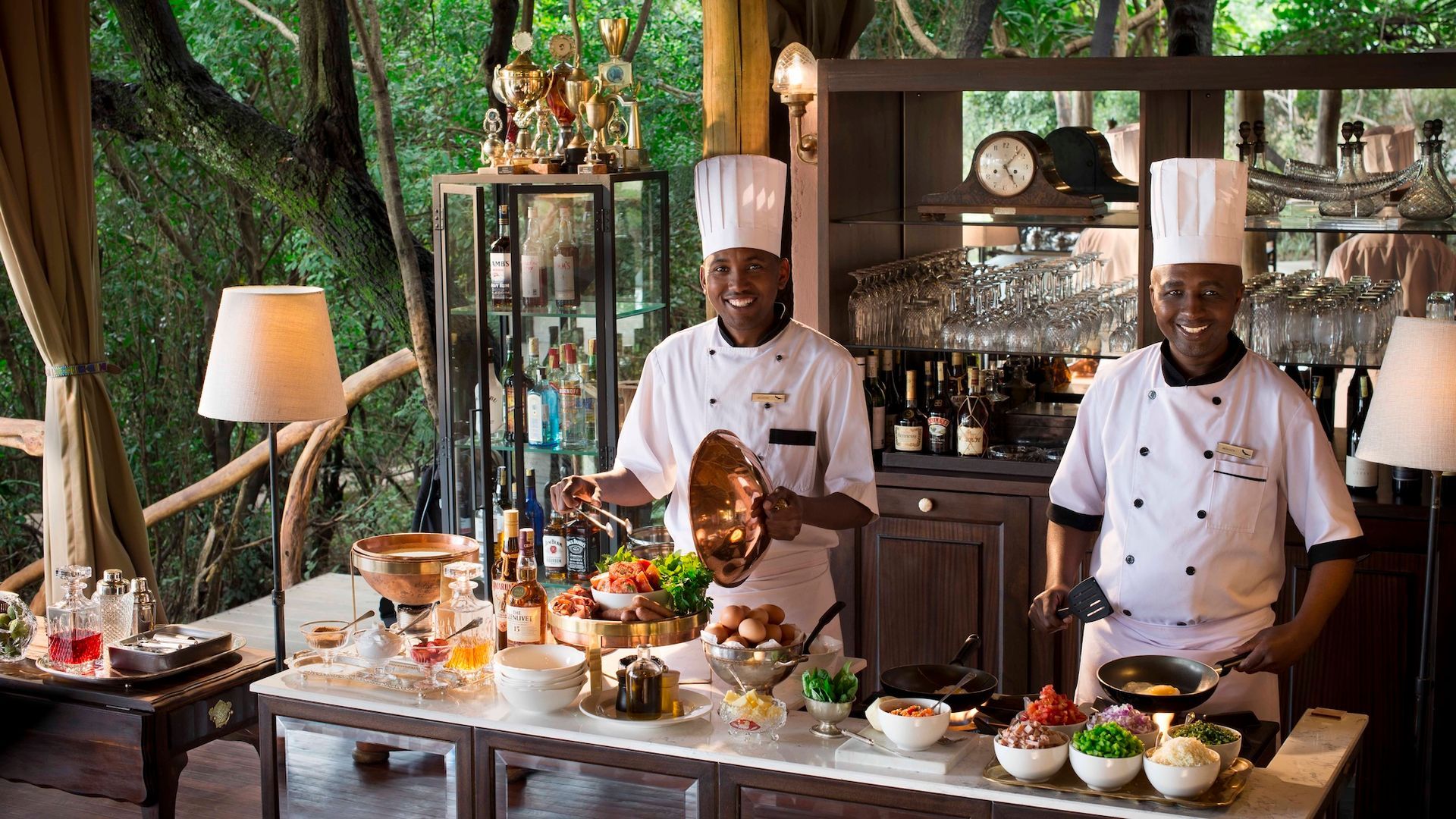
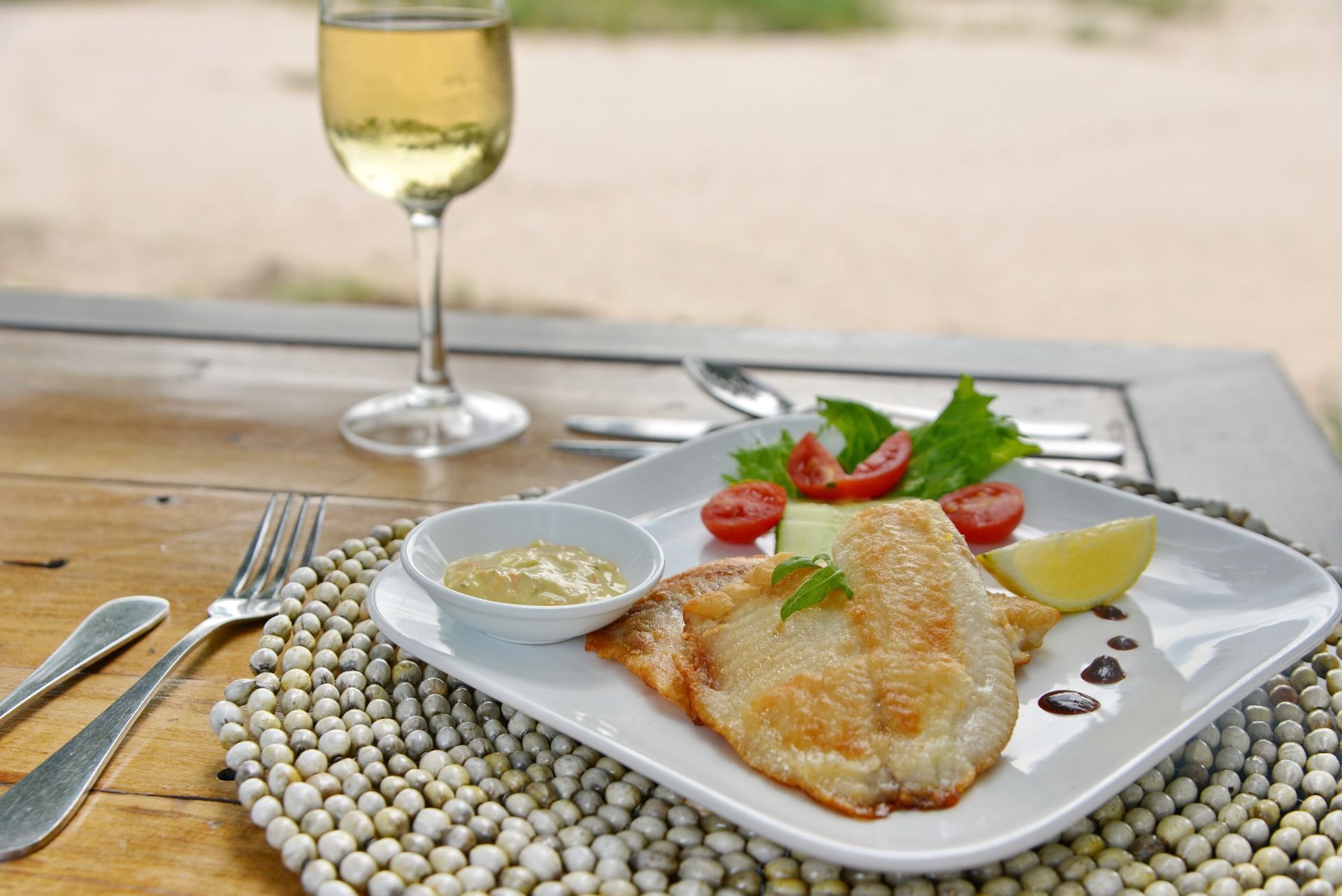
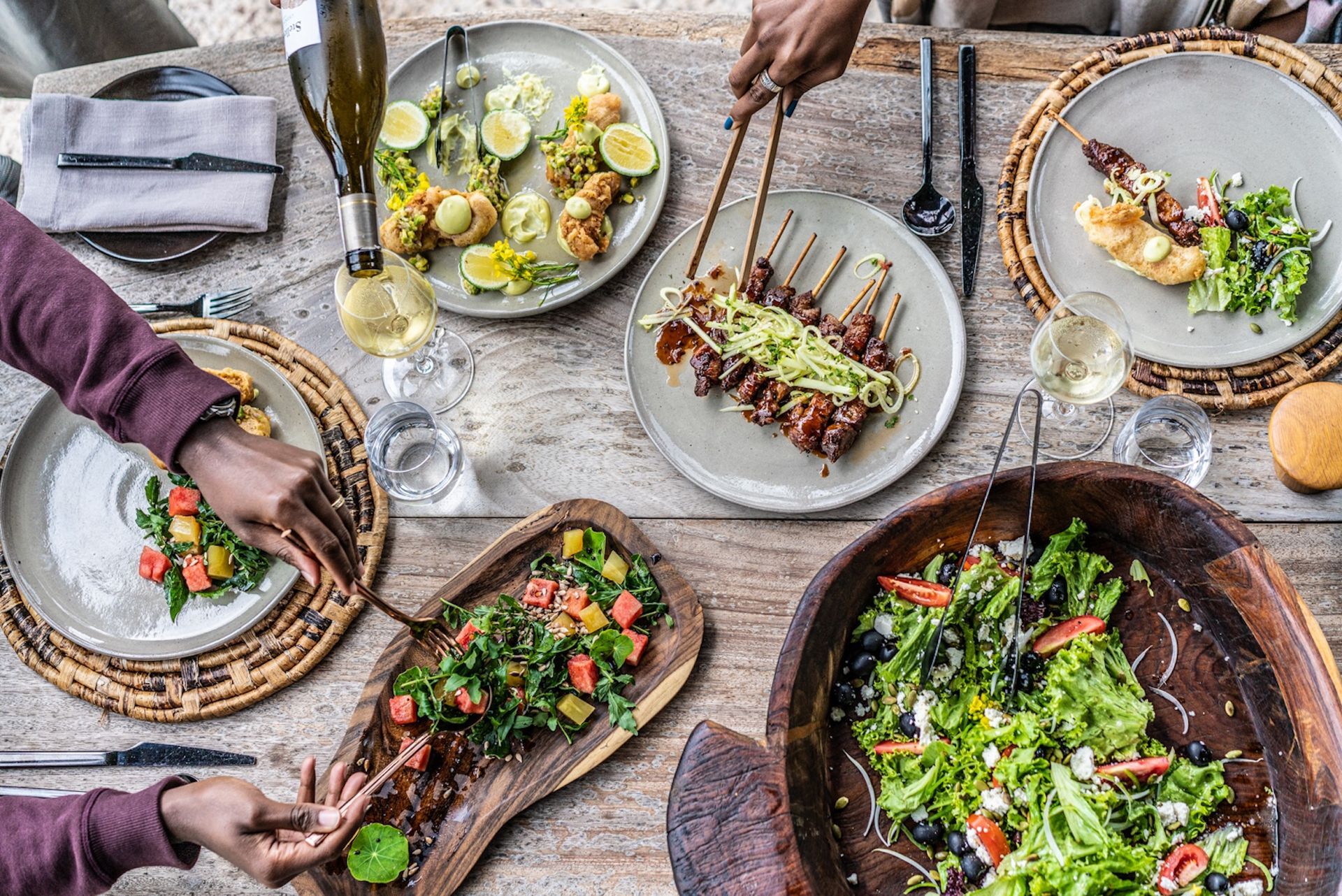
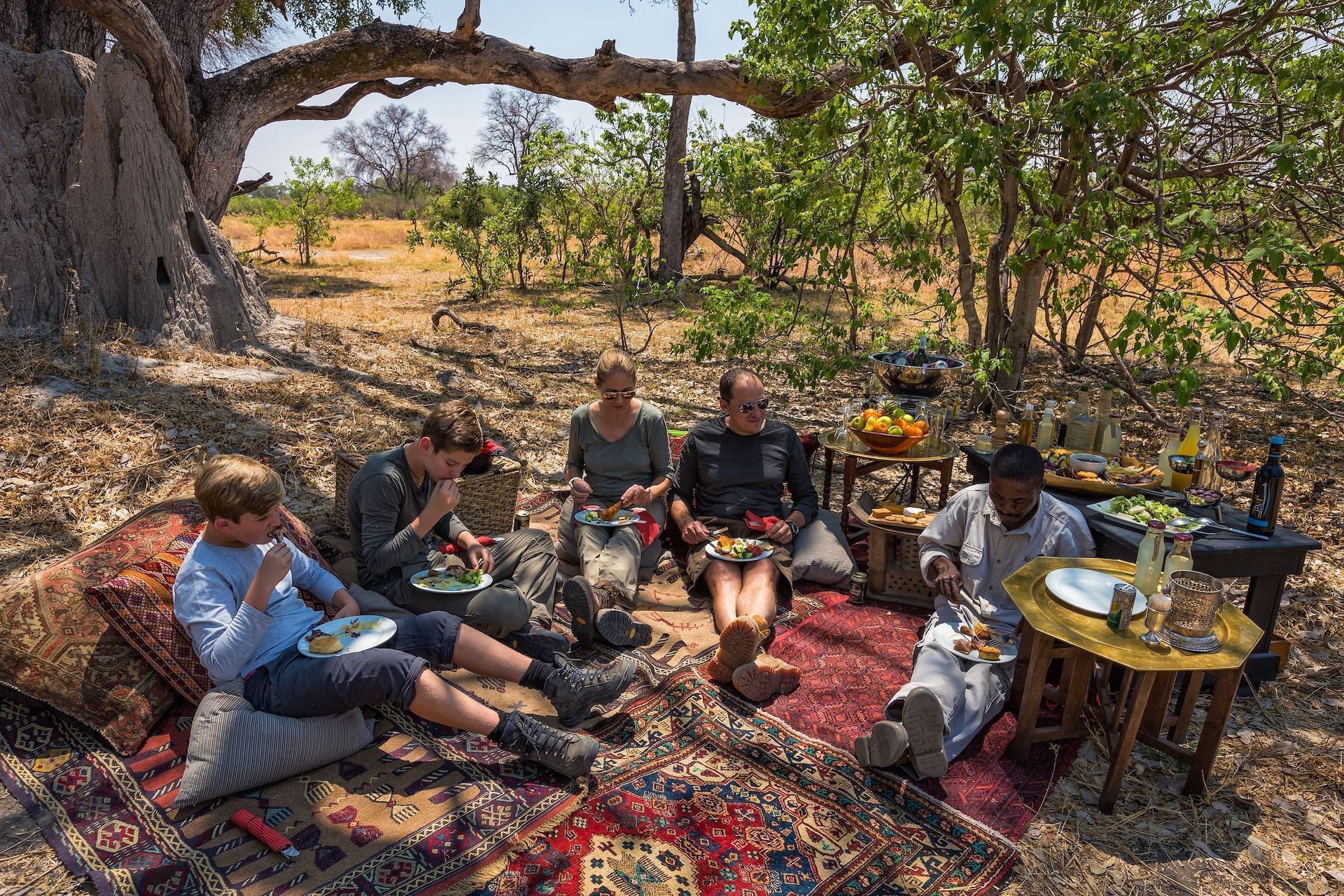
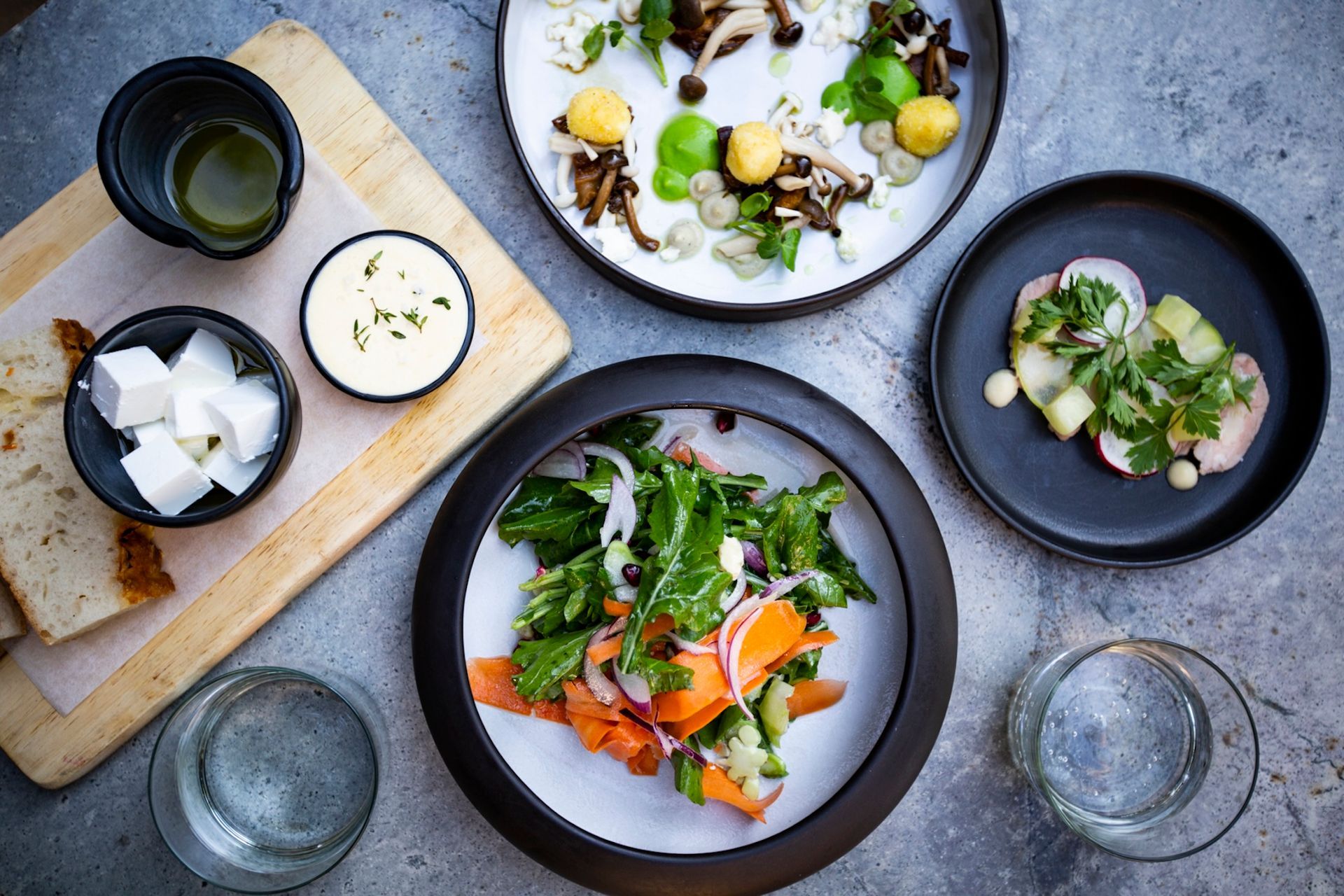
Today's safari guest is increasingly likely to find themselves sitting down to a meal that stops the conversation in exactly the same way the lion did three hours earlier, delivered in a setting so spectacular and with a level of culinary ambition so thoroughly unexpected that the inevitable question forms before the first course is finished: how on earth did they do that?
The setting, for starters
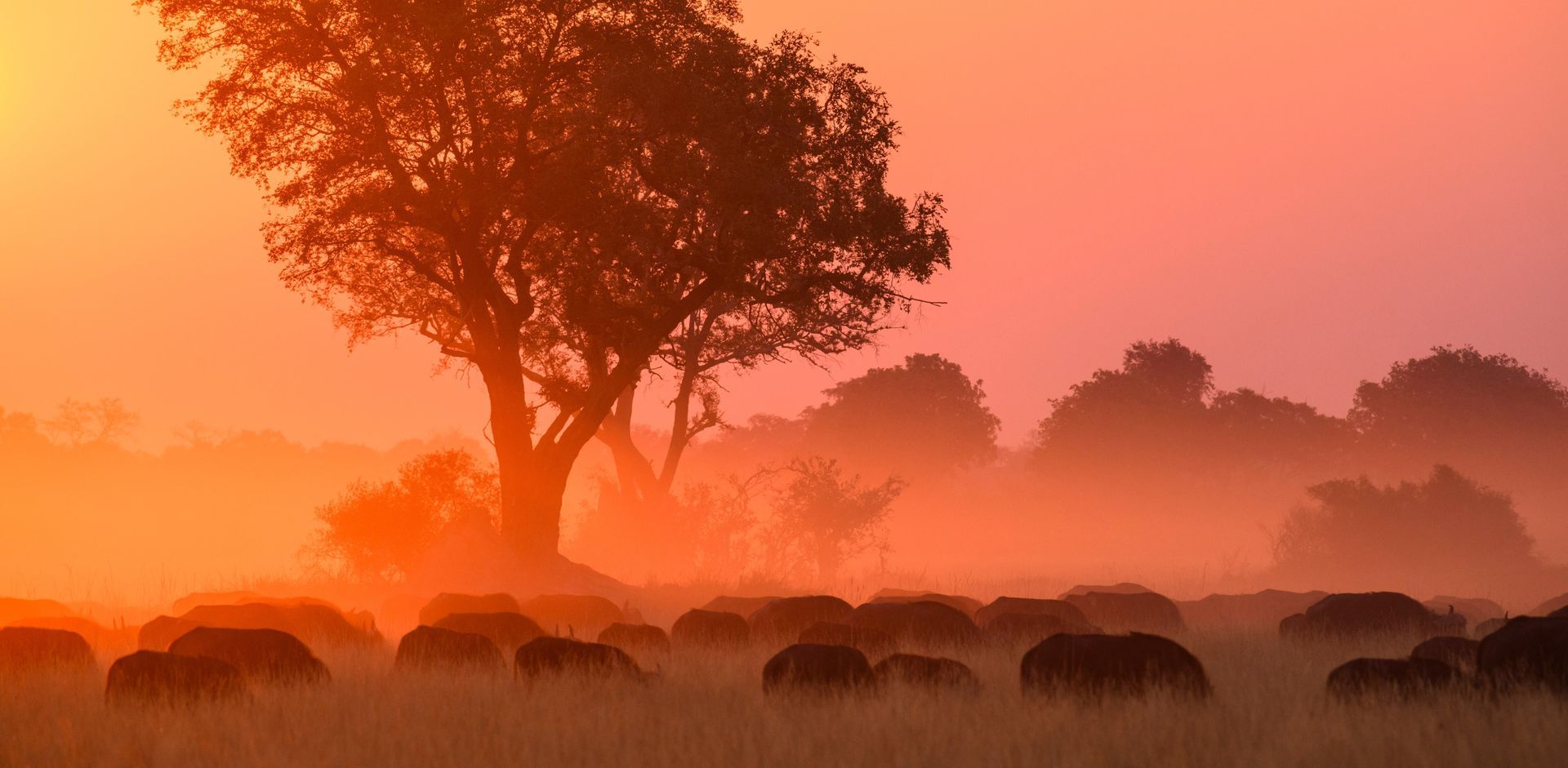
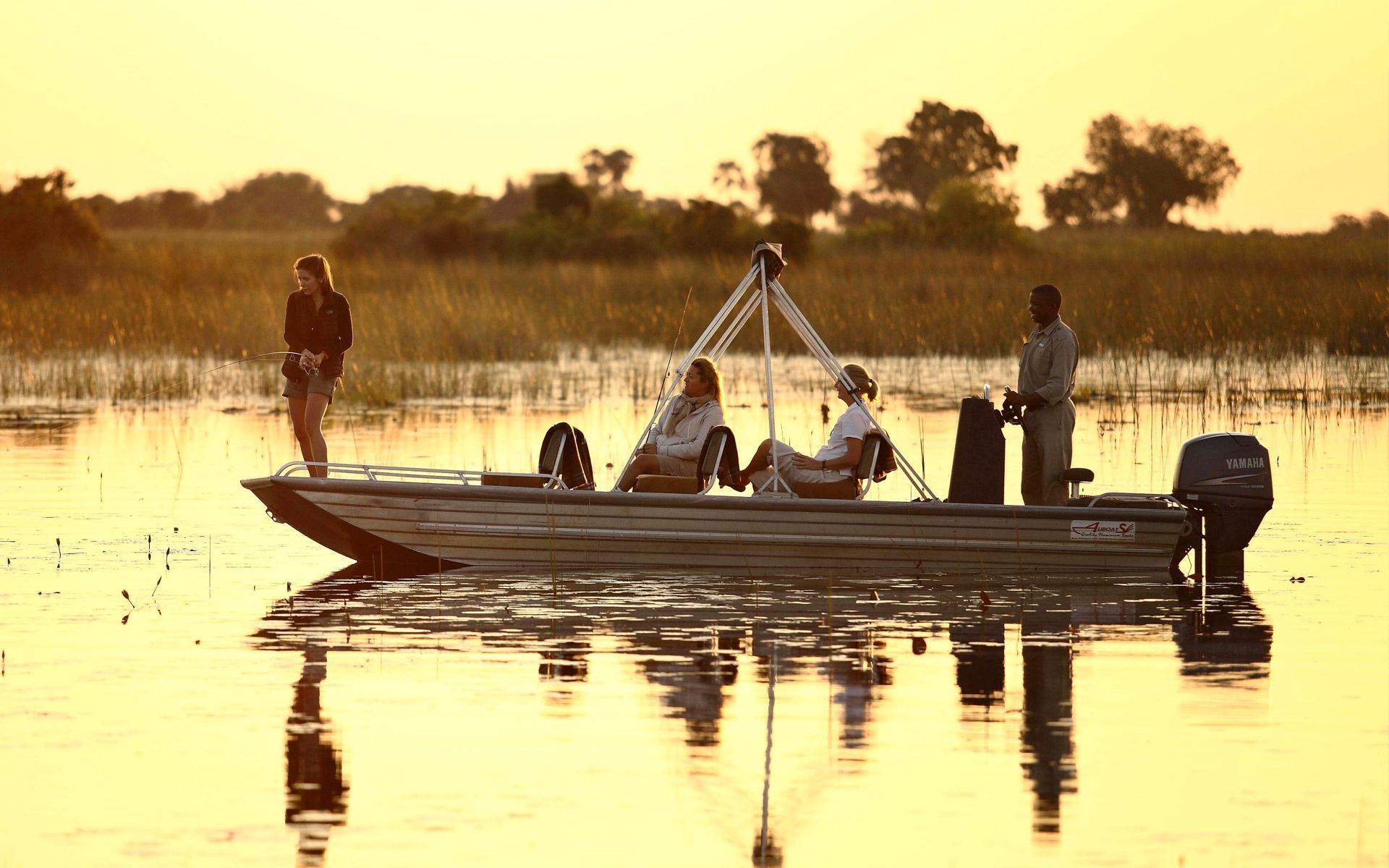
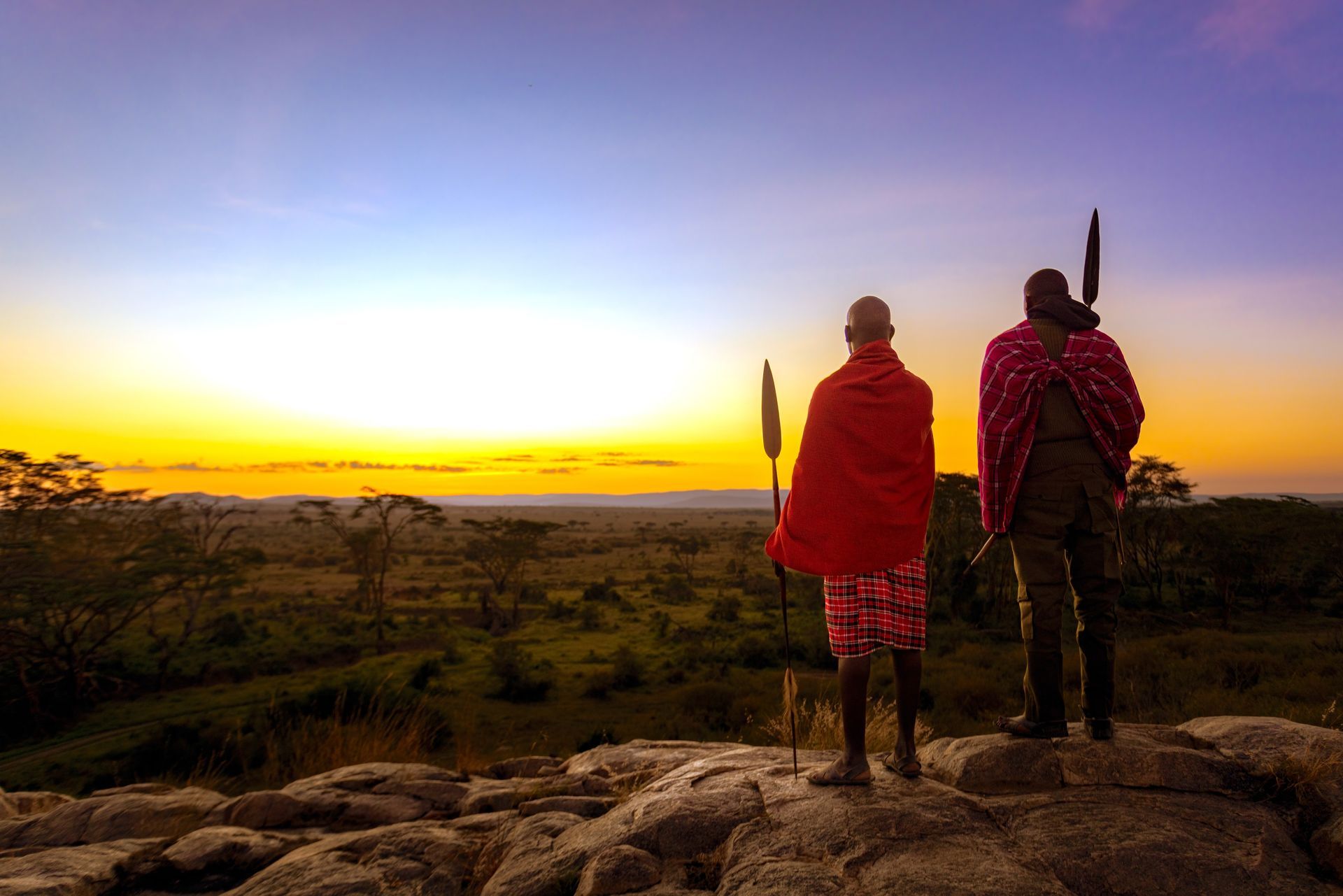
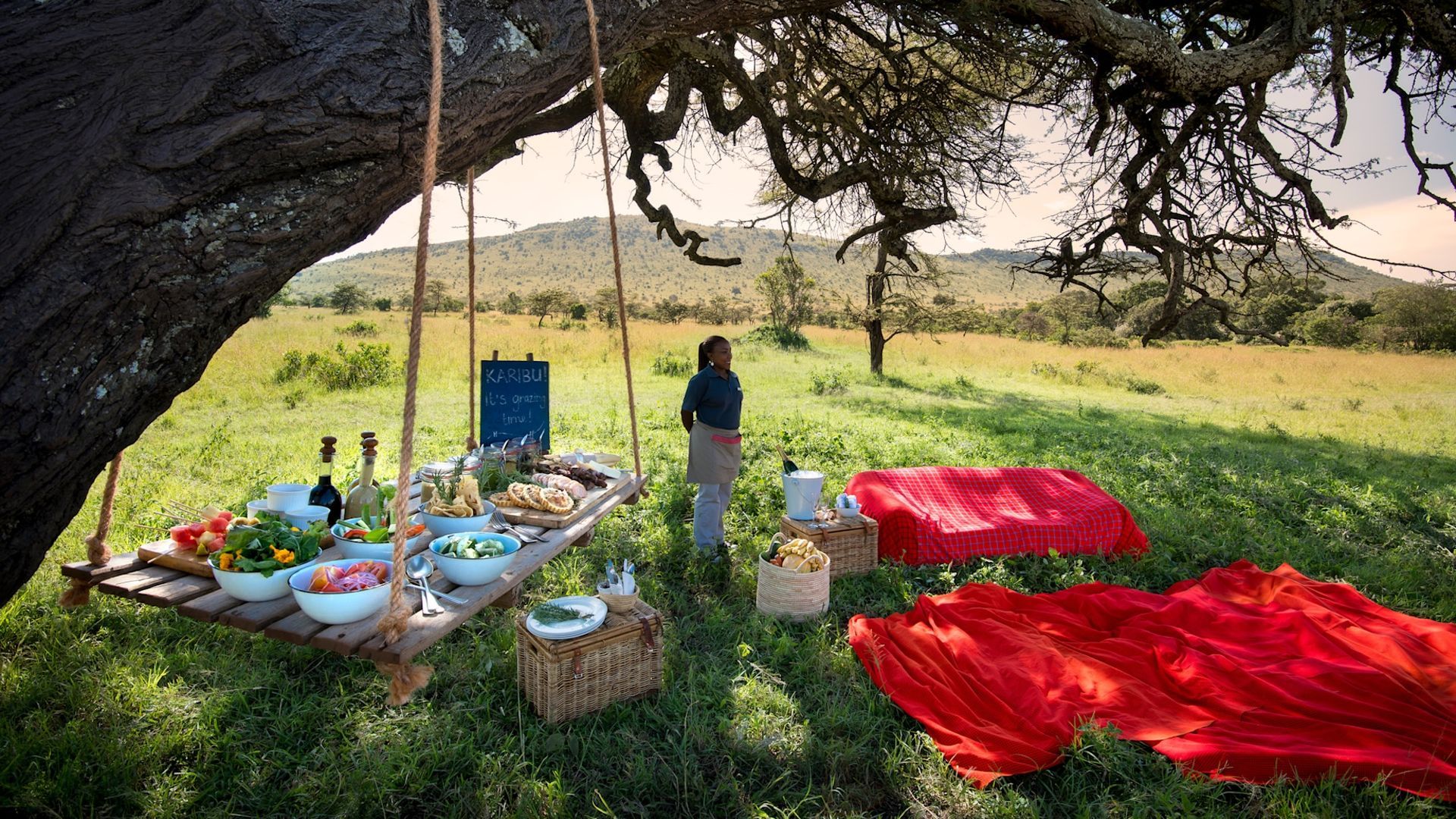
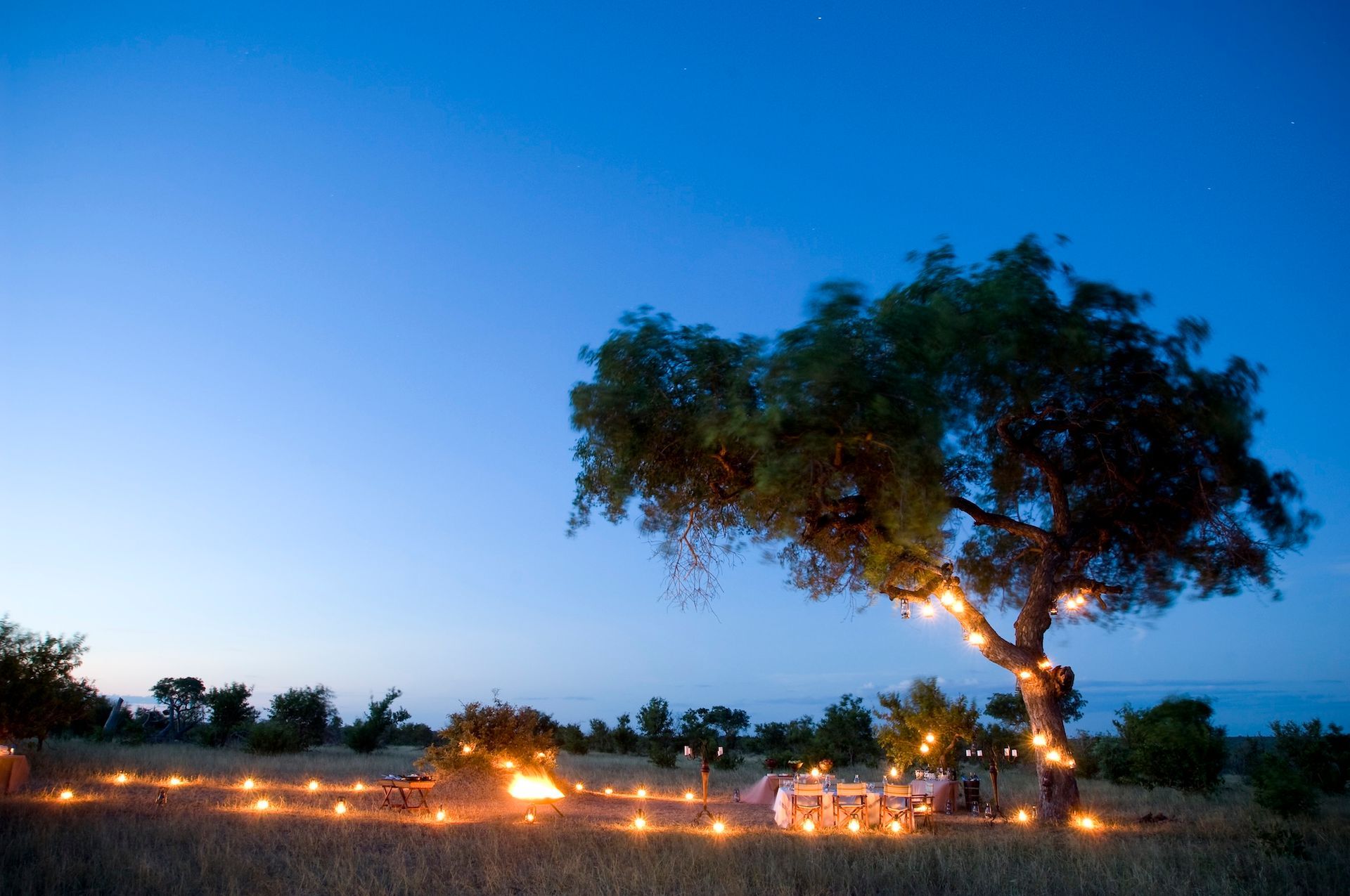
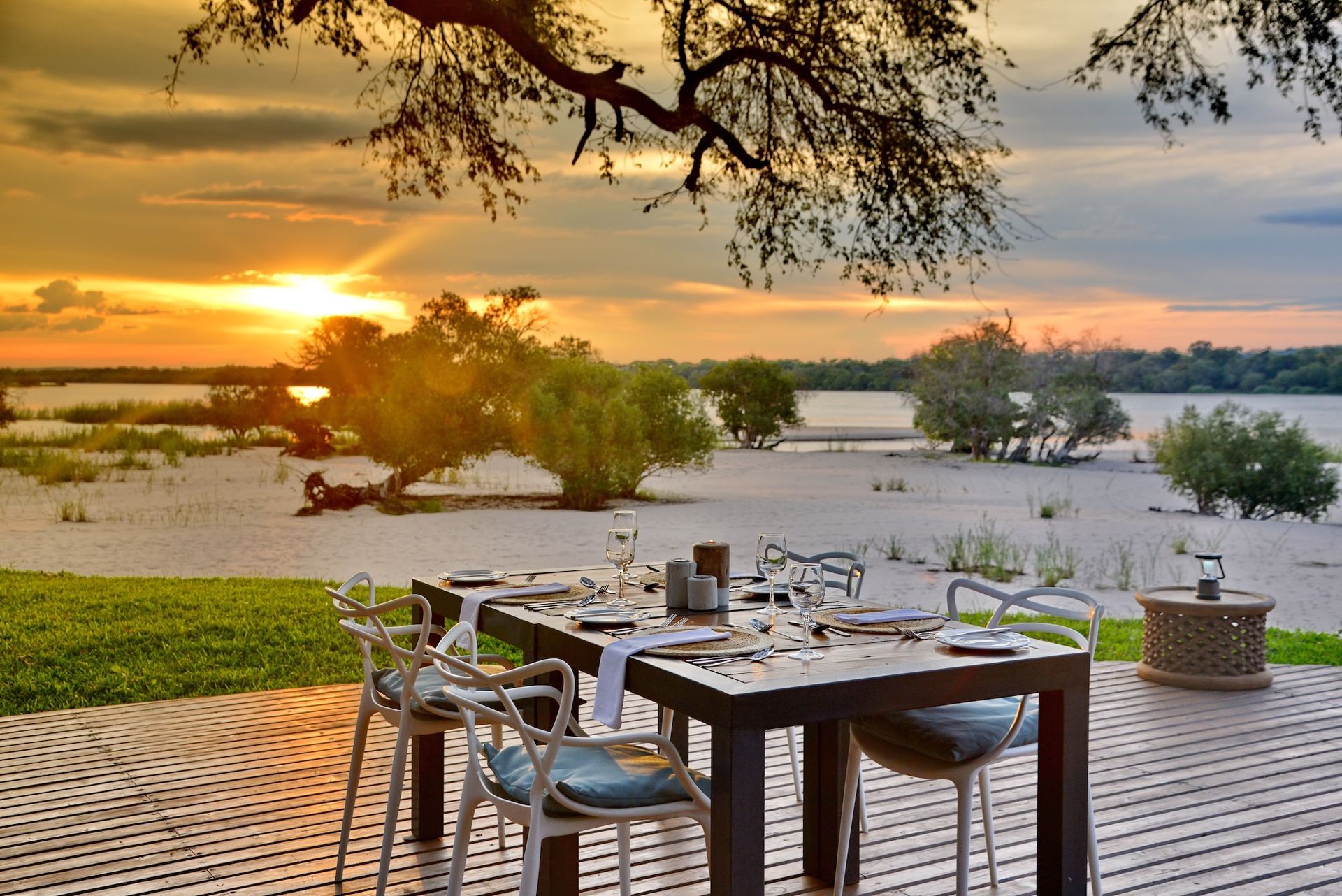
Before the food even arrives, the theatre of eating on safari deserves its moment. Dining rooms in their traditional sense don't exist on the modern safari thanks to the advent of using what nature provides, whether it's a handy seasonal riverbed, a boma with a crackling log fire, an open area in the middle of an achingly beautiful savannah or a deck in the middle of nowhere overlooking a waterhole. Imagine the best breakfast set-up ever beneath a fever tree on the banks of a river while a family of elephants drinks 50m away, entirely indifferent to the fact that there are warm pastries involved. Or a long picnic lunch on a channel of the Zambezi where the wildlife simply gets on with its business while you get on with yours, and neither party seems to mind the arrangement. Then there's the candlelit dinner a deux beneath a towering tree bedecked with lanterns, accompanied by bubbly on ice and the serenade of a distant hyena.
&Beyond, which operates lodges across East and Southern Africa, has turned the outdoor dining experience into one of its signatures, setting tables on the banks of the Mara River with hippos audible in the shallows below, or on the Oloololo Escarpment with the sweeping plains of the Masai Mara spread out in the evening light. The food would be good anywhere but in a location like that, it becomes unforgettable.
The logistics, since you asked
The question of how safari lodge chefs create culinary magic is not merely rhetorical. Getting high-quality, fresh ingredients into a remote wilderness location, keeping them at the right temperature without conventional infrastructure, producing dishes of serious ambition from a bush kitchen that may be operating on a generator, and doing all of this consistently, every day, for guests who have paid serious money and arrived with serious expectations, is a logistical achievement of the first order.
Machaba Camp in Botswana's Khwai Concession, winner of the Safari Awards for Best Safari Cuisine in Africa, uses innovative coal cold rooms rather than conventional refrigeration to keep ingredients fresh, managing an eco-footprint that would shame most urban restaurants while producing food that has no business being as good as it is given the circumstances. The ingenuity behind operations like this is worth pausing to appreciate, because the seamlessness of the finished product gives no indication whatsoever of what it took to get it to the table.
Royal Chundu on the Zambian banks of the Zambezi does something equally interesting with its sourcing, drawing directly on its own gardens and local farms for ingredients including traditional Zambian vegetables like katapa (cassava leaves), chibwabwa (pumpkin leaves) and chinshungwa, a wild vegetable found only in the rainy season and nowhere else. The result is food that is not merely delicious but genuinely specific to the place it's served in, which is about as satisfying a thing as a meal can be.
The chefs who make it happen
Singita, which operates lodges across six African countries from the Sabi Sand to the Serengeti to Rwanda's Volcanoes National Park, has been setting the benchmark for safari cuisine for the better part of three decades. The food philosophy is built around freedom: chefs creating menus from what is seasonal, local and exceptional, with farm-to-table sourcing woven into the programme since the opening of its first lodge.
The wine programme across Singita properties is equally serious, with cellars stocked to a standard that any sommelier would be proud of and that takes full and very enjoyable advantage of the exceptional quality and relative affordability of South African fine wine.
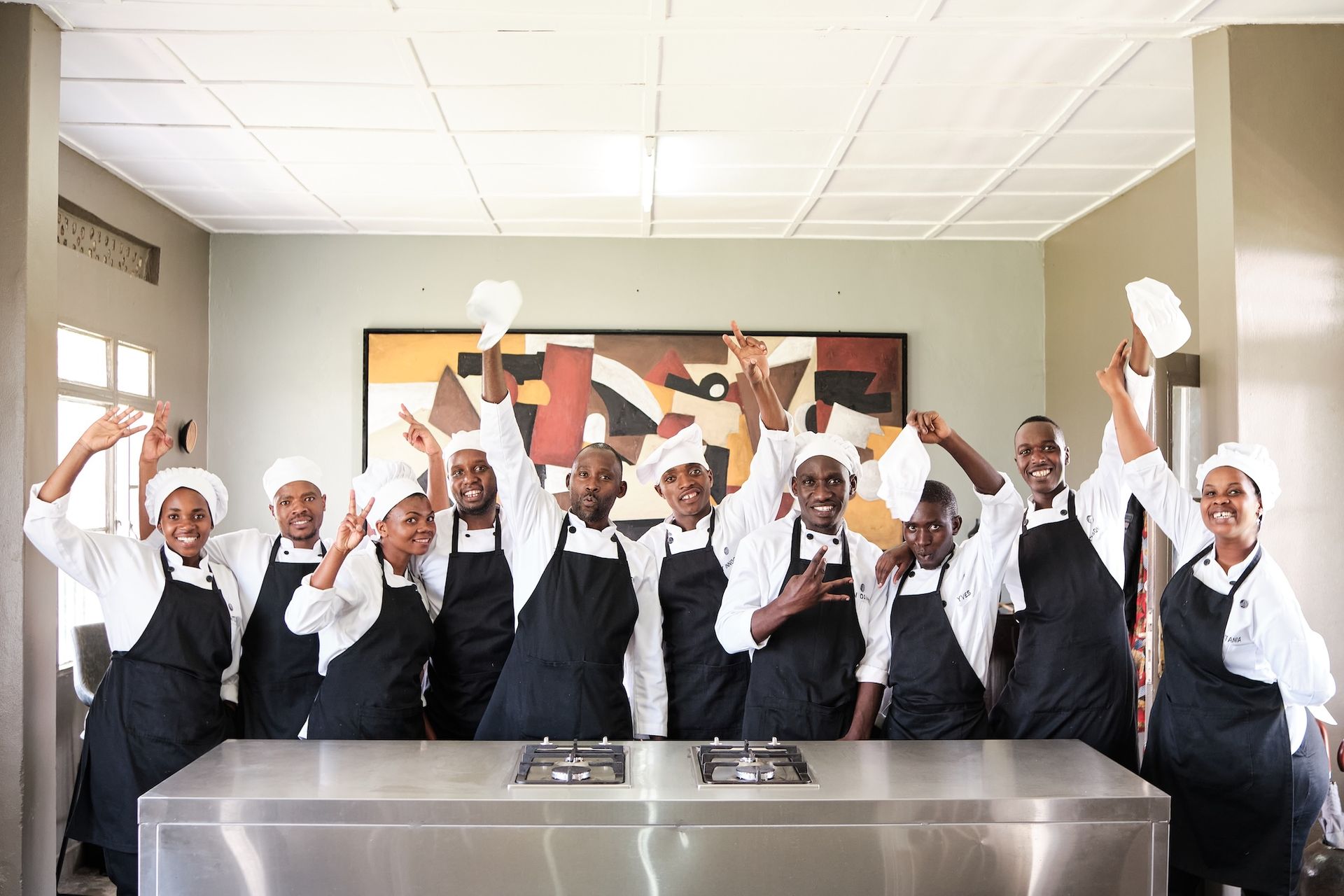
Singita has also established Community Culinary Schools in South Africa, Tanzania and Rwanda in partnership with the Prue Leith Culinary Institute, training young people from local communities as commis chefs of genuine professional calibre. The food is extraordinary not because talent has been imported from elsewhere but because talent has been developed here, in the places where the cooking happens, by people who understand the ingredients and the landscape in a way that no amount of formal training elsewhere can replicate.
Londolozi in the Sabi Sand draws on a combination of family heritage and meticulous sourcing, with recipes rooted in the family history and ingredients sourced from the lodge's own Village Gardens and local ethical suppliers. Free-range game, sustainably caught seafood and the seasonal produce of the South African Lowveld form the foundations of menus that manage to be simultaneously deeply authentic and quietly sophisticated, which is a balance considerably harder to achieve than it sounds.
Fire for its own sake & dietary requirements
The braai, which the rest of the world insists on calling a barbecue in a translation that entirely misses the point, is where meat finds its most natural expression. A braai is a cultural institution out in the bush and, in the right hands, a culinary art form. Springbok chops over acacia wood on a cool evening with a glass of pinotage in hand is the kind of flavour that bypasses the brain entirely and goes straight to some more primitive register where food memories are stored alongside the wildlife sightings and the sunsets.
The modern safari kitchen faces one more challenge that its predecessors didn't: the extraordinary diversity of dietary requirements that today's guests arrive with. Vegetarian, vegan, gluten-free, dairy-free, nut allergies, kosher, halal, raw food, low-carb... The list is as long and as varied as the guest list itself, and the best lodges handle all of it as a creative opportunity to be embraced.
It's impressive, given all of the challenges safari cuisine faces to get plated. Producing a plant-based tasting menu of genuine ambition in a remote bush camp, using locally sourced ingredients and without access to the specialist suppliers that an urban restaurant would take for granted, requires both skill and ingenuity in equal measure. The fact that guests with complex dietary needs consistently report that their safari meals were among the finest they've eaten anywhere is a testament to chefs who take the brief seriously.
The wow factor
What the best safari lodges have understood, and what the industry as a whole has taken note of, is that mealtimes are part of the safari experience. The food, the setting, the service, the wine, the extraordinary nature of eating something genuinely delicious in a place this genuinely extraordinary, all compounds into something that guests talk about with the same enthusiasm as the leopard sighting and the elephant at the waterhole.
The question "how did they do that?" is, in the end, the right one. It implies surprise, delight and a level of achievement that exceeded expectation, which is precisely what the best safari kitchens are delivering every day in conditions that most chefs would consider a significant professional challenge. They do it through talent, ingenuity, extraordinary sourcing and a determination to make every meal as memorable as everything else Africa has to offer.
Hungry yet? Get in touch with Sian and Cara at Zafaris and let's build you a safari worth every single course.
Text: Sharon Gilbert-Rivett