
DUCKS ON THE SAFARI POND
Behind the scenes of an "effortless" experience
There is a particular magic to a great safari. Guests often describe it as smooth, relaxed, beautifully paced and full of those pinch yourself moments where everything seems to line up perfectly. You arrive at your tent and your luggage is already waiting. Your guide knows exactly when to stop the vehicle so the light hits the lioness in the most flattering way possible. Your sundowner appears with the right measure of gin without you ever having said a word. And somehow, even though you feel like you are roaming one of the wildest places on the continent, the whole experience feels effortless. But is it? Really?


Effortless is lovely. Effortless is seductive. Effortless is also a complete illusion.
Because while you are gliding along your safari pond, perfectly serene and untroubled, there are many pairs of feet paddling furiously beneath the surface to make it all possible. And they are doing it so well that you rarely notice.
Let us pull back the curtain.
We'll start with us. We're the quintessential safari ducks. Before you even get on a plane, we're paddling madly to pull together the perfect (and we do mean PERFECT) itinerary for you - one that's packed with incredible destinations, fantabulous lodges and camps and the most incredible experiences possible. We line everything up, get i's dotted and t's crossed, make sure everything fits together flawlessly and then feverishly fuss over it from start to finish, making sure everything goes without a hitch.
Once you're where you need to be, out there in the back of beyond, the safari day begins long before your watch or phone says it should. While you are still in that delicious moment between sleep and reality, someone is already checking the weather, testing the radios, prepping the vehicle and making sure the blankets are warm and the coffee is hot. Your guide is reviewing the previous afternoon’s sightings, chatting with the tracker, scanning the surrounding area, and mapping out possible routes.
They are also planning how to manage the bush’s complete disregard for human schedules. Animals do not appear on cue. Weather rarely behaves. And the universe has a habit of throwing in a few curveballs for good measure. None of this appears in the final version of your morning. What you see is a calm guide greeting you with a smile and a fresh brew.
The behind the scenes choreography continues once you leave camp. While you are soaking up the landscapes and snapping photographs, your guide is in full mental overdrive. They are analysing tracks in the sand, reading bird alarm calls, watching wind direction, timing the movement of different species, and scanning every patch of shade for the flick of a tail. They are doing three things at once: keeping you safe, keeping you informed and keeping you blissfully unaware of the amount of work required to maintain that balance. A good guide makes it look easy. It is not.
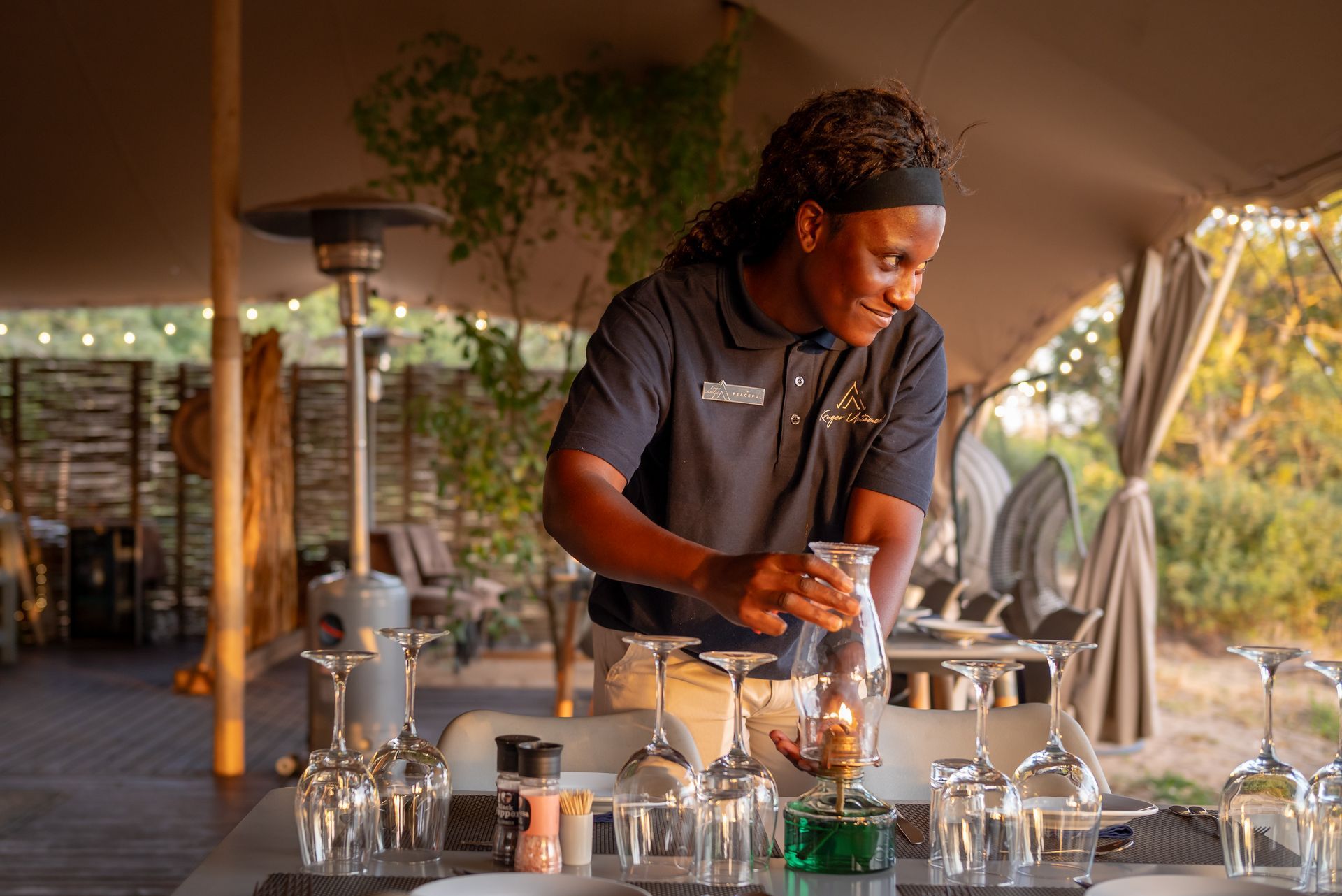
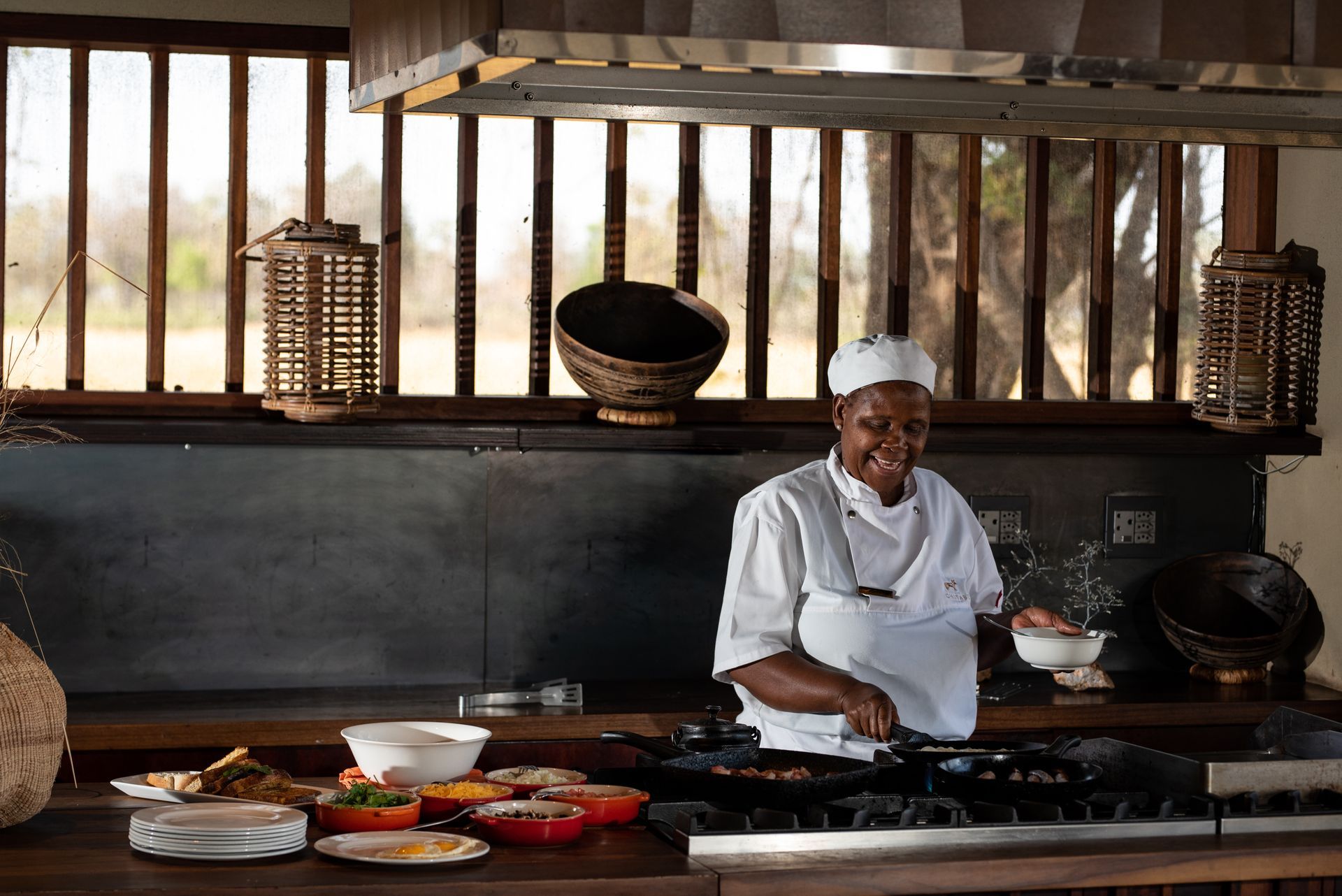
Meanwhile, back in camp, the team is resetting your world so it feels as if nothing requires effort at all. Your room is cleaned without disturbing a single personal item. Fresh pastries appear at breakfast as if baked by magic. Laundry is washed, pressed and folded so quickly that it feels suspicious. A completely new menu is planned for lunch that still matches your preferences, which you mentioned once, very casually, while half awake on your first morning. Someone noticed. Someone took notes.
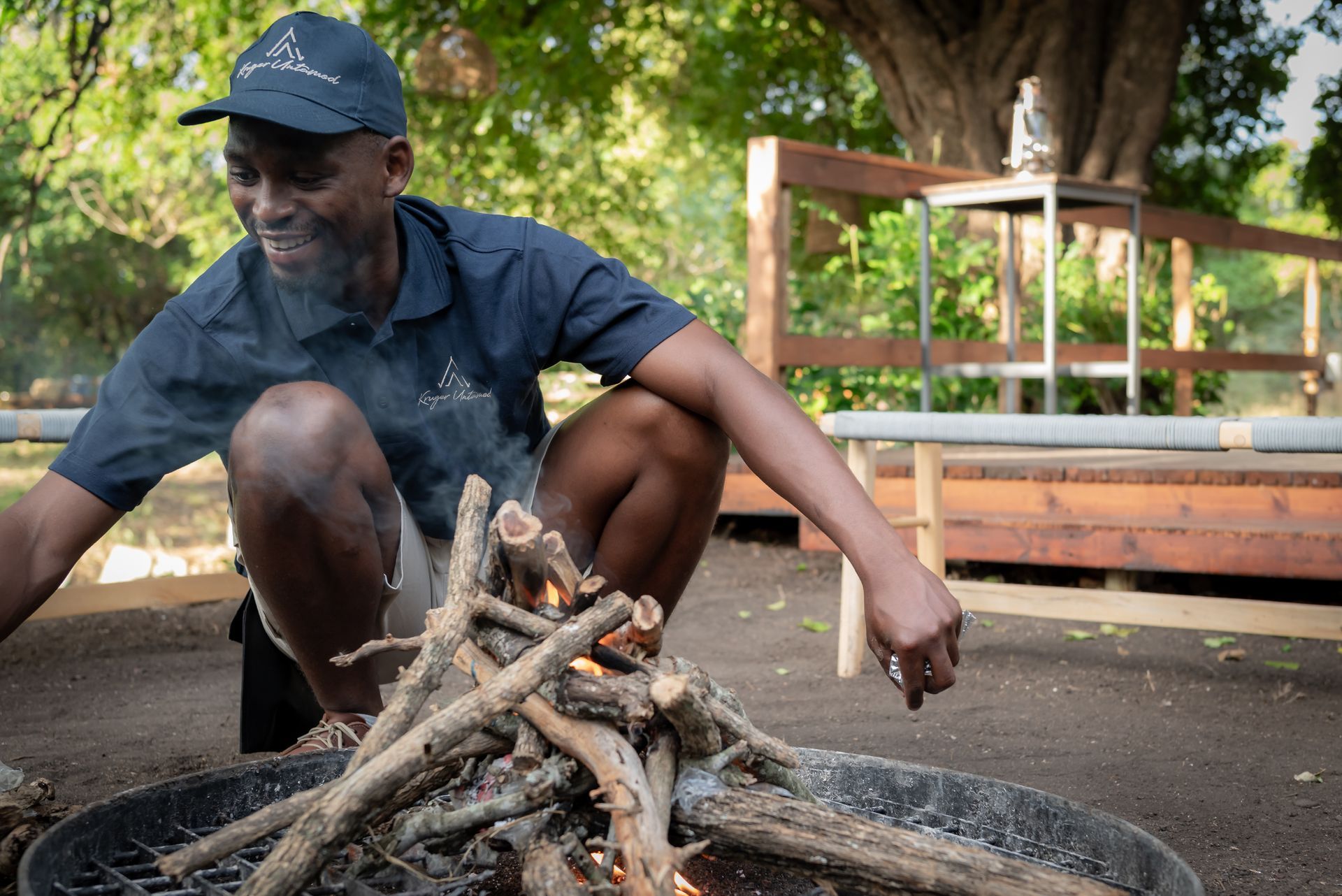
Safari service is an art form. The best teams move like water. You turn, and something you needed is already there. You wonder aloud, and the answer materialises. You step away from the fire to look at the stars, and when you return there is a warm cloth waiting. This is not coincidence. This is hospitality engineered with military precision and delivered with the sort of charm that makes you believe it just happened by chance.
The duck paddling continues into the afternoon. Vehicles are refuelled. Cool boxes are refilled. Your favourite sundowner drink is quietly confirmed. The kitchen adjusts timings to match your drive schedule. The guide and tracker confer once more, sharing sightings with other vehicles and deciding on the best possible plan for the evening. Every choice is considered. Every angle is weighed. And every bit of it is designed so that your second drive of the day feels as fresh and effortless as your first.
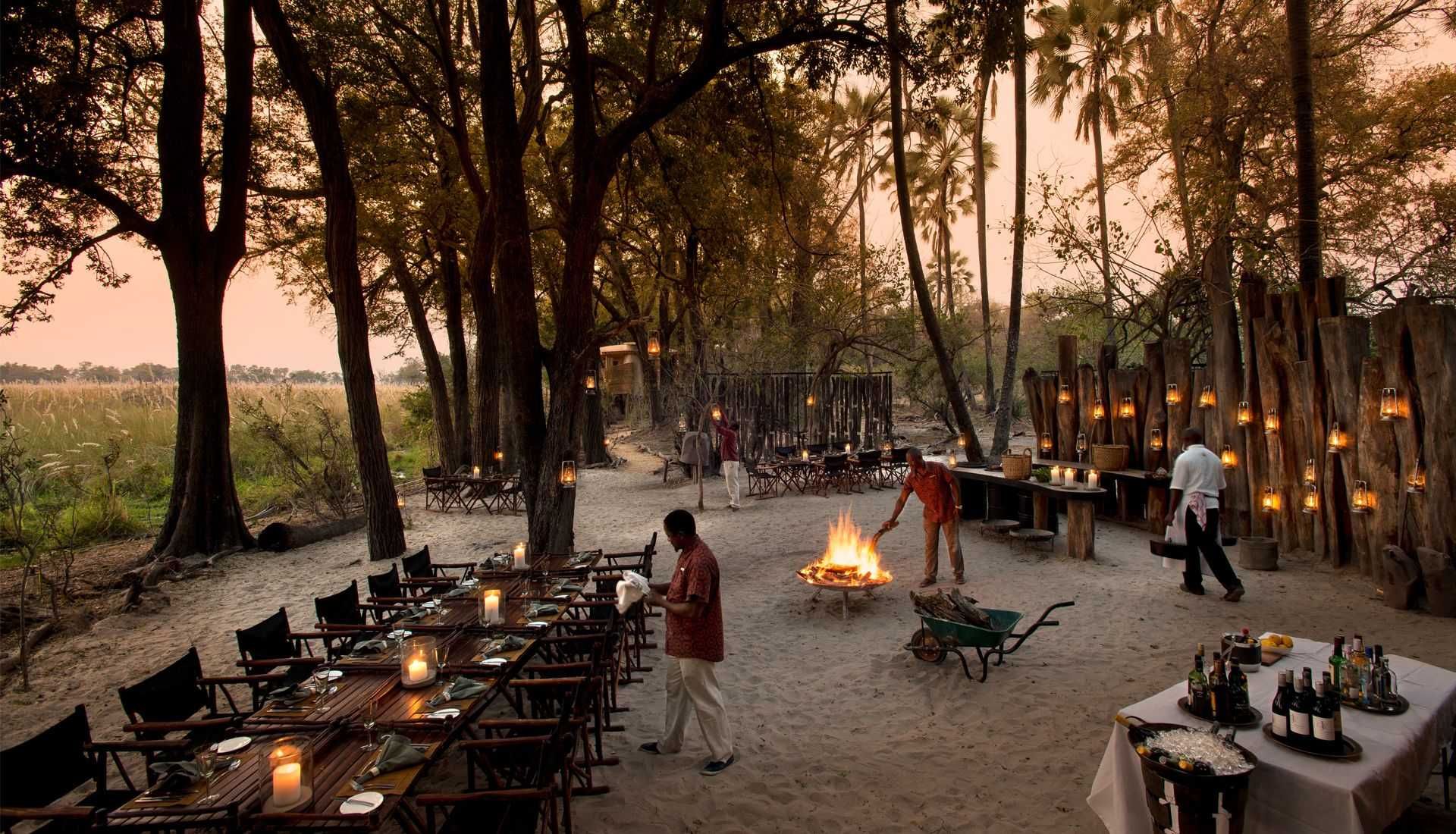
Then comes the night. When you flop into bed after dinner, pleasantly exhausted and full of stories, the camp team is only just beginning the last stretch of the day. Guests are checked. Radios are tested. Lights are set. Security does their quiet patrols. The fire is put out safely. Breakfast prep begins. A new set of logistics is lined up for the morning. It is a seamless loop of organisation that hides itself on purpose. The less you see, the more successful they feel.
This is the truth of a safari that feels effortless. It is never effortless. It is practiced brilliance. It is hours of training, years of experience, deep reserves of passion and a collective commitment to making the wild feel welcoming.
So yes, enjoy that easy glide across the water. That is what you are here for. But spare a thought for the many feet paddling below the surface... Ours and the countless others across Africa. They are the reason your safari feels like magic and not mayhem. And they would never dream of telling you how much work it takes. Because the best safari teams believe one thing above all else - your safari should feel effortlessly natural. (Drops mic and walks away).
Text: Sharon Gilbert-Rivett